Does Browning Meat Before the Slow Cooker Actually Matter?
Quick Answer: Browning changes flavor, and nothing else. A slow cooker is a wet environment that tops out near 210 degrees Fahrenheit, and the browning reactions that build deep, roasted, savory flavor need a dry surface over roughly 300 degrees — conditions the pot can never create on its own. Searing first is the only chance those flavors get. It does not seal in juices, it is not about safety, and plenty of recipes genuinely do not need it. For a beef stew or chili it is the single most valuable ten minutes of the recipe. For a shredded salsa chicken it is a pan you washed for nothing.
Brown for the dishes where meat is the flavor. Skip it where the sauce is.
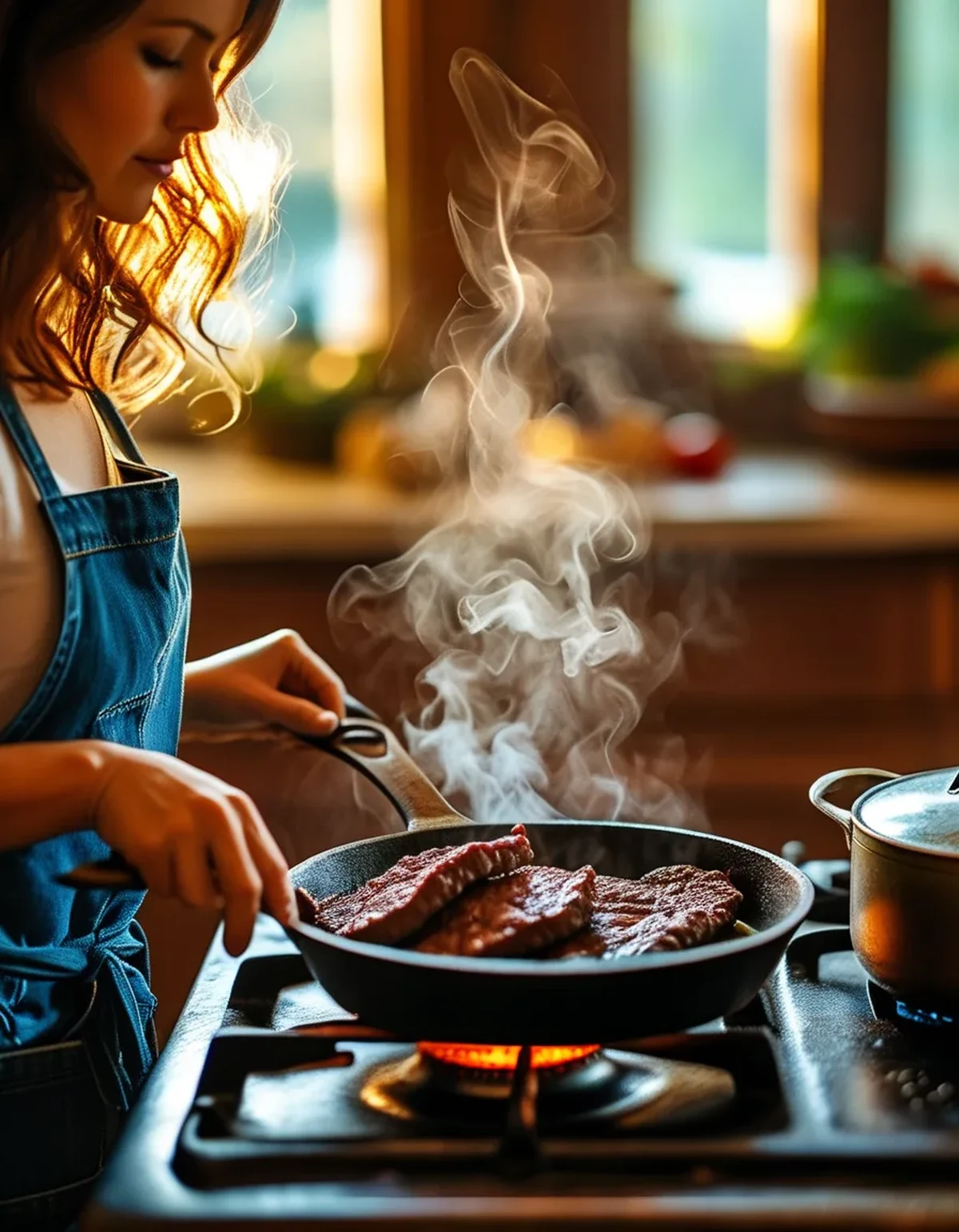
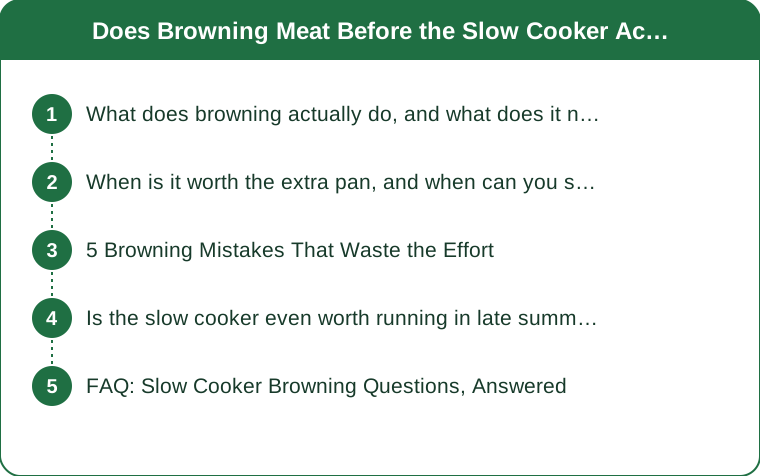
What does browning actually do, and what does it not do?
It builds flavor compounds that cannot form inside the pot, and that is the entire — and sufficient — case for it.
When meat hits a hot, dry pan, its surface climbs past the temperature where the Maillard reaction kicks off: proteins and sugars recombining into hundreds of new roasted, savory, complex flavor compounds and the brown crust that carries them. This needs heat well above the boiling point of water at the surface, which is exactly what a slow cooker can never provide. Everything inside the pot is capped near 210 degrees by moisture, which is why unbrowned slow cooked meat comes out tender but pale and one dimensional — boiled, essentially.
Sear first, and those compounds dissolve into the braising liquid over the hours and season the entire dish from within.
What browning does not do is just as worth knowing.
It does not seal in juices. This one has been tested repeatedly: seared meat loses moisture at the same rate as unseared. The crust is flavor, not a waterproof jacket.
It does not make the dish safe. Safety comes from the pot reaching and holding proper temperature, which it does with or without a sear.
It does not tenderize. Tenderness in a slow cooker comes from hours of collagen slowly converting to gelatin. Searing contributes nothing to that process.
So the honest framing is that browning is optional in the way seasoning is optional. The dish works without it. It is simply better with it, in direct proportion to how central the meat is to the flavor.
When is it worth the extra pan, and when can you skip it?
Decide by asking one question: is the meat the flavor, or is the sauce?
Worth it, clearly: beef stew, pot roast, short ribs, carnitas style pork shoulder, and any chili built on ground beef. These dishes taste like their meat, and the difference between browned and unbrowned versions is obvious in a side by side. Ground beef gets a second benefit — browning lets you drain the fat, which otherwise renders into the pot and leaves a greasy surface no amount of skimming fully fixes.
Worth browning something, if not the meat: even in skip friendly recipes, five minutes browning the onions and tomato paste in a pan builds most of the same depth for a fraction of the effort. Tomato paste cooked to brick red is the great slow cooker shortcut almost nobody uses.
Genuinely skippable: chicken thighs or breasts destined for shredding under a big sauce — salsa chicken, butter chicken, barbecue pulled chicken. The sauce dominates, the meat is a texture, and the sear washes out. Also skippable: soups loaded with aromatics and spices, and any weekday where the alternative to an unbrowned dinner is a takeout order.
A middle path exists at the end of cooking. For dishes finished under sauce, pulling the cooked meat, spreading it on a sheet pan, and running it under the broiler for a few minutes adds crisped edges — this is how good carnitas get their texture, and it moves the browning work to a point where the pan is not one more obstacle at 7am.
One thing not to do: do not brown meat the night before and refrigerate it raw in the middle. Partially cooking meat and holding it is a food safety problem. Sear immediately before the pot, or not at all.
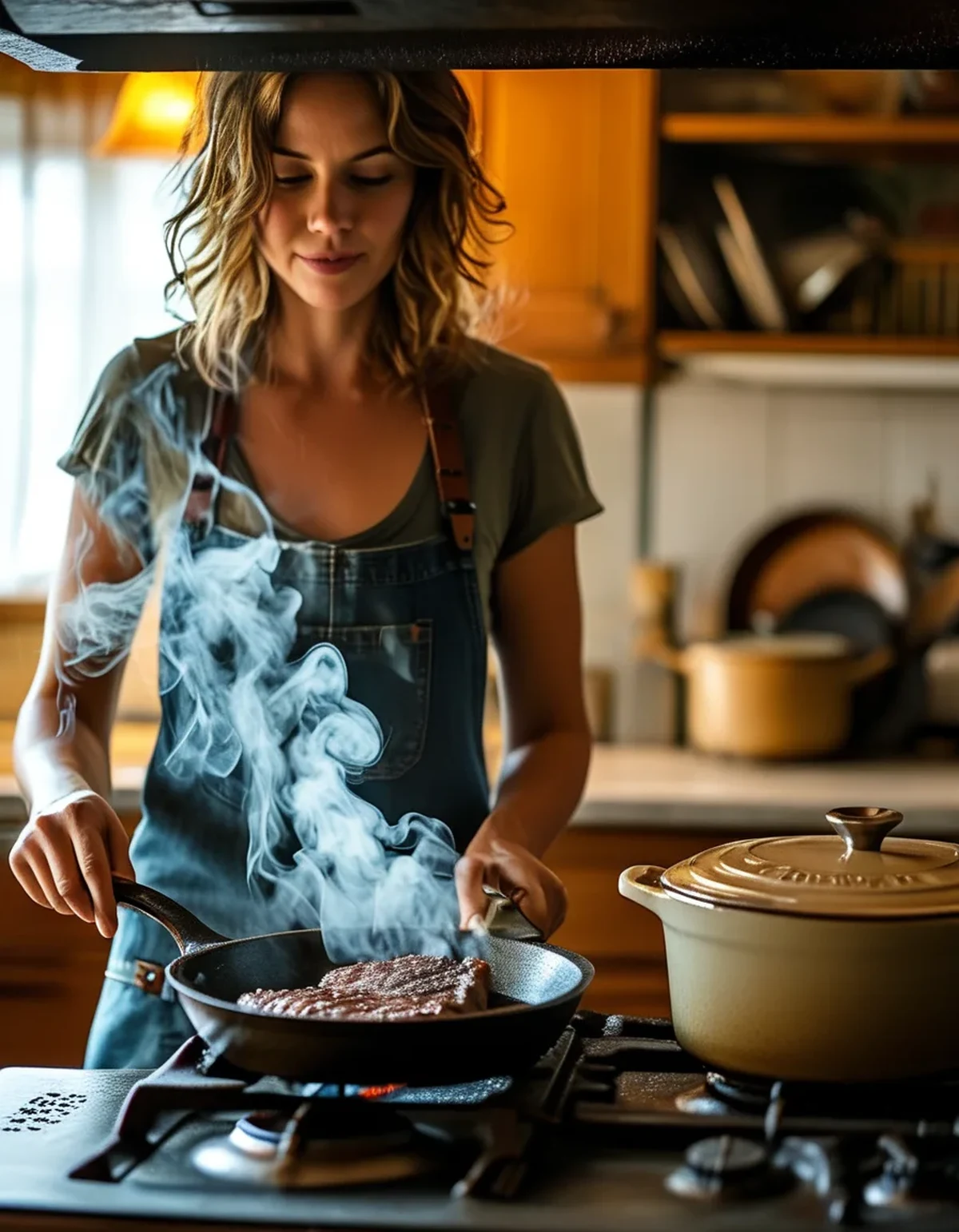
5 Browning Mistakes That Waste the Effort
1. Crowding the pan. A packed skillet drops in temperature, the meat releases moisture, and everything steams grey instead of searing brown. Work in batches with space between pieces, even though it feels slower. One crowded batch takes longer than two proper ones and delivers less.
2. Skipping the pat dry. A wet surface has to boil dry before it can brown, which costs minutes and turns the exercise into steaming. Paper towels before the pan are half the technique. Salt the surface at the same time and you have done the other half.
3. Leaving the browned bits in the pan. The fond — the dark glaze stuck to the skillet — is the most concentrated flavor the process makes. Deglaze with a splash of stock, wine, or even water, scrape it loose, and pour it into the pot. Rinsing it into the sink is discarding the point of the exercise.
4. Moving the meat constantly. Browning needs sustained contact. Set the piece down, leave it alone until it releases easily, then turn once. Fidgeting resets the process every time.
5. Searing every surface of every cube. For stew meat, browning two sides of each piece, or even browning half the batch hard and adding the rest raw, gets you most of the flavor for half the time. The pot blends everything over eight hours — perfectionism at the sear stage is invisible by dinner.
Is the slow cooker even worth running in late summer?
More than any other appliance in the kitchen, and the browning question is part of why.
A slow cooker adds far less heat to a kitchen than an oven. In the last stretch of August heat, a pot roast that would have meant three hours of a 325 degree oven warming the whole house instead simmers along adding barely more warmth than a lamp. This is the season the appliance quietly earns its counter space — the meals feel like fall is coming, the kitchen stays like summer.
The sear is the only hot, active part of the process, so structure it kindly:
Brown in the morning cool. Ten minutes at the stove at 7am is a completely different experience from the same ten minutes at 5pm in a warm kitchen, and the pot does not care when its contents arrived.
Use the outdoor grill as your searing station. A screaming hot grill browns stew meat and pork shoulder beautifully, keeps every bit of the heat and splatter outside, and adds a faint smokiness the pan cannot. In grilling season, this is the best version of the technique.
Lean on the skip list when the weather wins. A no sear salsa chicken that actually gets made beats an ambitious seared ragu that loses to a hot Tuesday.
And as September approaches, the calculus shifts again — cooler mornings make the sear pleasant, school schedules make the ready-at-6pm dinner priceless, and the first proper stews of the season are the exact dishes where browning pays most. Worth getting the habit in place now.
The usual safety notes hold year round: thaw meat fully before it goes in, keep the pot between half and three quarters full, and get the lid on and leave it there.
FAQ: Slow Cooker Browning Questions, Answered
Can I brown meat in the slow cooker insert itself?
Only if the manufacturer says the insert is stovetop safe — some metal inserts are, and most ceramic ones absolutely are not and can crack. Even stovetop safe inserts tend to brown less evenly than a heavy skillet, but they do save the extra pan.
Does flouring the meat before searing help?
It browns faster and the flour thickens the sauce slightly, which suits stews. The trade is a slightly less intense crust and a bit more sticking. For gluten free households, skipping the flour changes very little.
Is browning worth it for chicken breasts?
Rarely. They are lean, they are almost always sauced and shredded, and the sear mostly toughens the exterior. Spend the effort on the aromatics instead, or switch to thighs, which forgive the pot far better.
What if the recipe says no need to brown?
Believe it about half the time. Recipe writers optimize for fewer steps because it reads easier. If the dish is built on beef, pork shoulder, or ground meat, browning improves it whatever the recipe says. If it is a sauced, spiced, shredded dish, the writer is right.
TL;DR:
- Browning creates roasted flavor compounds a wet 210 degree pot can never make — that is its entire job, and it is enough.
- It does not seal juices, add safety, or tenderize, so treat it as seasoning: essential for beefy, meat forward dishes, skippable under big sauces.
- Dry the meat, work in batches, and always deglaze the pan into the pot — the stuck brown bits are the payoff.
- In late summer, sear in the cool morning or on the grill, and let the slow cooker keep the kitchen livable.
Next pot roast, take the ten minutes and deglaze the pan. Taste it against your usual version and the question answers itself.
Keep Reading
This article is for general informational purposes only and is not medical advice. Always consult a qualified health professional for guidance specific to you.