Why Frozen Meat Is the One Slow Cooker Shortcut Worth Skipping
Quick Answer: A slow cooker heats gradually by design, and a frozen piece of meat can sit between 40F and 140F - the range where bacteria multiply fastest - for hours before it comes up to a safe temperature. Thaw first. If you need the shortcut, thaw overnight in the fridge or use small pieces rather than a whole frozen roast.
The frozen chicken goes straight in, the lid goes on, and dinner sorts itself out. It is the single most appealing thing a slow cooker seems to offer.
Every food safety body advises against it, and unlike a lot of kitchen rules this one has a specific and understandable mechanism behind it.
It is also the only slow cooker shortcut worth genuinely avoiding, which is why it deserves its own explanation rather than a footnote.
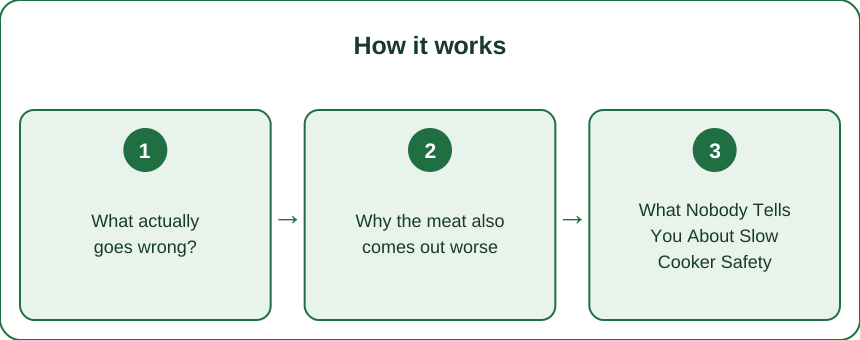
What actually goes wrong?
Bacteria multiply fastest between about 40F and 140F. That range is usually called the danger zone, and the standard guidance is to spend no more than two hours in it.
A slow cooker is designed to heat gently. That is the entire point of the appliance and it is why it makes tough cuts tender. On low, it may take four to six hours to bring the contents up to a proper simmer.
Put a room-temperature or refrigerated piece of meat in and the food passes through the danger zone reasonably quickly, because it starts near the top of it and the surrounding liquid heats fast.
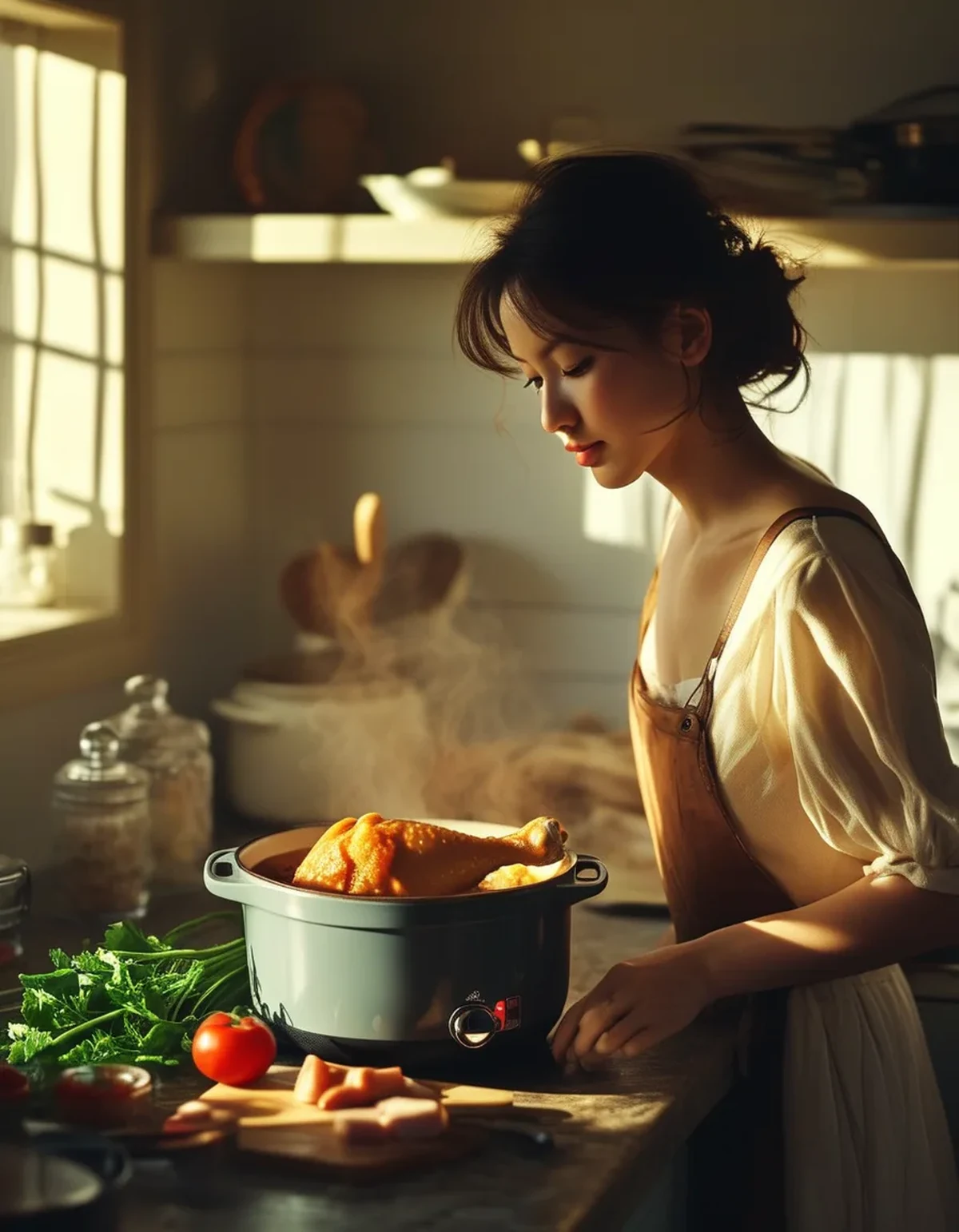
Put a frozen piece in and two things work against you. The meat starts far below the zone, so it has the whole range to travel. And it absorbs an enormous amount of energy simply melting - ice takes far more heat to become water than water takes to get warm - so the entire pot stalls at low temperature while it thaws.
The result is a large mass of meat sitting in the danger zone for a lot longer than two hours, with the centre reaching it last and staying there longest.
The finished dish will usually reach a safe temperature eventually. The problem is that some bacteria produce toxins during that long warm phase, and those toxins are not destroyed by later cooking.
Why the meat also comes out worse
Even setting safety aside, the texture argument is strong enough on its own.
A slow cooker works because collagen in tough cuts converts to gelatin over long exposure to moderate heat. That conversion needs the meat to actually be at temperature, and the hours the pot spends thawing are hours the collagen is doing nothing.
So you either cook for the normal time and get meat that has had far less effective cooking than the recipe assumed - tough, chewy, and confusingly so given how long it was in there - or you extend the time and overcook the outside while waiting for the middle.
Frozen meat also releases a lot of water as it thaws. A recipe balanced for the liquid the meat naturally gives up now has significantly more, which is one of the most common causes of a thin, washed-out slow cooker sauce.
And browning is off the table. Anything you would normally sear cannot be seared from frozen, and searing is where a large part of the flavor in a slow-cooked dish comes from.
So the shortcut costs you texture, sauce consistency, and flavor, before the safety question is even raised.
What Nobody Tells You About Slow Cooker Safety
The frozen meat rule gets all the attention, and there are three related things that matter just as much and are barely mentioned.
A full pot heats far more slowly than a half-full one. Filling a slow cooker to the brim - which people do when batch cooking for the week - creates the same slow-climb problem that frozen meat does, with fresh ingredients. Fill to between half and two-thirds for the appliance to work as designed.
Large whole pieces are riskier than chunks. A whole frozen chicken or a large roast has a centre that is a long way from any heat. The same weight cut into two-inch pieces heats in a fraction of the time. If you must start from partially frozen, small pieces are much safer than one large mass.
Cold liquid compounds it. Adding stock straight from the fridge to a cold pot with cold meat means everything starts at the bottom. Warm or hot liquid gives the whole thing a substantial head start and costs nothing but a kettle.
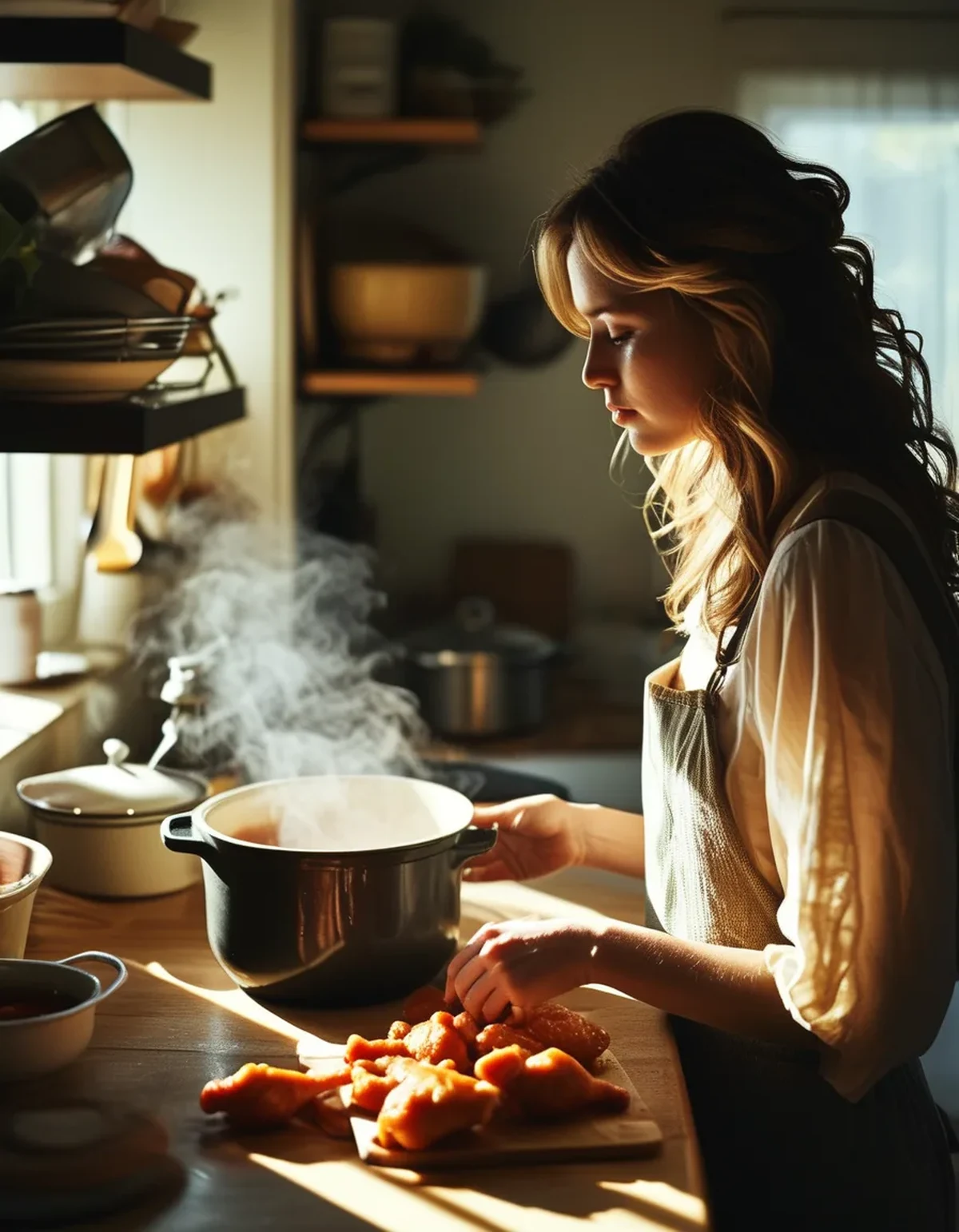
And the delayed-start timer is the genuine hazard here, not the frozen meat itself. Frozen meat plus a four-hour delayed start means raw meat sitting at room temperature for four hours and then thawing slowly for four more. That is the combination that causes actual problems.
One more, less serious but annoying: putting anything frozen into a ceramic insert risks cracking it through thermal shock, particularly if the insert is already warm.
How do you keep the convenience without the risk?
The appeal of the shortcut is real, and there are four ways to get most of it back.
Thaw in the fridge overnight. This is the boring correct answer and it costs you thirty seconds of planning the night before. A pack of chicken thighs thaws fully in about twelve hours; a large roast needs twenty-four or more.
Freeze in slow-cooker-shaped portions. Freeze meat flat in a bag rather than in a block. A flat inch-thick portion thaws in the fridge in a few hours rather than overnight, which makes a morning decision possible.
Build freezer kits with everything except the meat. Chopped vegetables, aromatics, and sauce base frozen together, meat kept fresh or thawed separately. You still get the dump-and-go morning; you just add thawed meat to it.
Use the quick-thaw method properly when you forget. Sealed bag, submerged in cold water, changing the water every thirty minutes. Chicken thighs take under an hour. Never warm water, and never on the counter.
And if you have already put frozen meat in - it happens - check the internal temperature with a thermometer before serving rather than trusting the clock. 165F for poultry, 145F for whole cuts of pork and beef with a rest, 160F for anything minced. If the pot has been sitting on a delayed start with frozen meat in it, though, the safe call is to not serve it.
FAQ: Slow Cooker and Frozen Food Questions, Answered
Are frozen vegetables also a problem?
No. Vegetables do not carry the same bacterial risk, and they are small enough to thaw quickly. Add them frozen without concern - though add them later in the cook if you want them to keep any texture.
What about pre-cooked frozen items like meatballs?
Lower risk, since they are already cooked, but the pot still stalls while they thaw. Add them in the last hour rather than at the start and you get better texture too.
Can I put a frozen block of stock or sauce in?
Yes, if there is no raw meat in the pot waiting on it. Frozen liquid slows the climb but does not create the same danger, and it is a good way to use frozen stock.
TL;DR:
- A slow cooker heats gently, so frozen meat can spend many hours in the 40F to 140F range where bacteria multiply.
- The texture suffers too: less effective cooking time, more released water, thinner sauce, and no chance to sear.
- Frozen meat plus a delayed-start timer is the genuinely risky combination.
- Thaw in the fridge, freeze meat flat in portions, or build freezer kits with the meat kept separate.
Almost every other slow cooker shortcut is fine. This is the one worth the thirty seconds of planning it takes to avoid.
Keep Reading
This article is for general informational purposes only and is not medical advice. Always consult a qualified health professional for guidance specific to you.