How to Adapt an Oven Recipe for a Slow Cooker Without Guessing
Quick Answer: Cut the liquid by roughly a third to a half, because a slow cooker loses almost no moisture to evaporation. Brown the meat and aromatics in a pan first, since nothing browns in a slow cooker. Add dairy, fresh herbs and delicate vegetables in the last 30 minutes rather than at the start. And convert time roughly as one oven hour equals two hours on high or four on low. Those four changes handle almost every braise, stew and casserole.
You put a perfectly good oven recipe in the slow cooker and got soup.
Not a mistake in the recipe - a mistake in the translation.
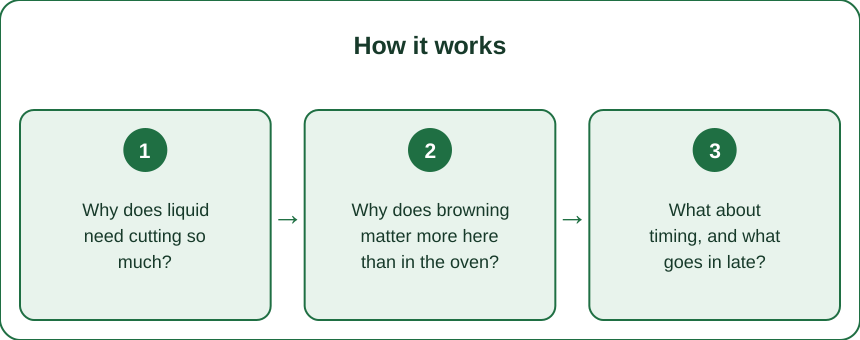
Why does liquid need cutting so much?
A slow cooker has a sealed lid and runs below boiling, so almost nothing evaporates. An oven casserole, even covered, loses a substantial amount over three hours.
Which means the liquid you start with is roughly the liquid you finish with, plus whatever comes out of the ingredients.
Meat and vegetables release a lot. Onions, mushrooms, courgettes and tomatoes all give up significant water during a long cook.
Start by cutting the recipe’s liquid by a third, and by half if the recipe is vegetable-heavy.
You can always add liquid at the end; you cannot easily remove it, which makes under-adding the safer error.
If it does end up thin, take the lid off and cook on high for the last 30 to 45 minutes, which is the standard fix and works well.
Why does browning matter more here than in the oven?
Because a slow cooker cannot produce browning at all. It operates well below the temperature range where the Maillard reaction happens meaningfully.
An oven browns the surface of everything it touches, which is a large part of where the depth of a casserole comes from.
Which means the flavour an oven creates for free has to be created in a pan before anything goes in the pot.
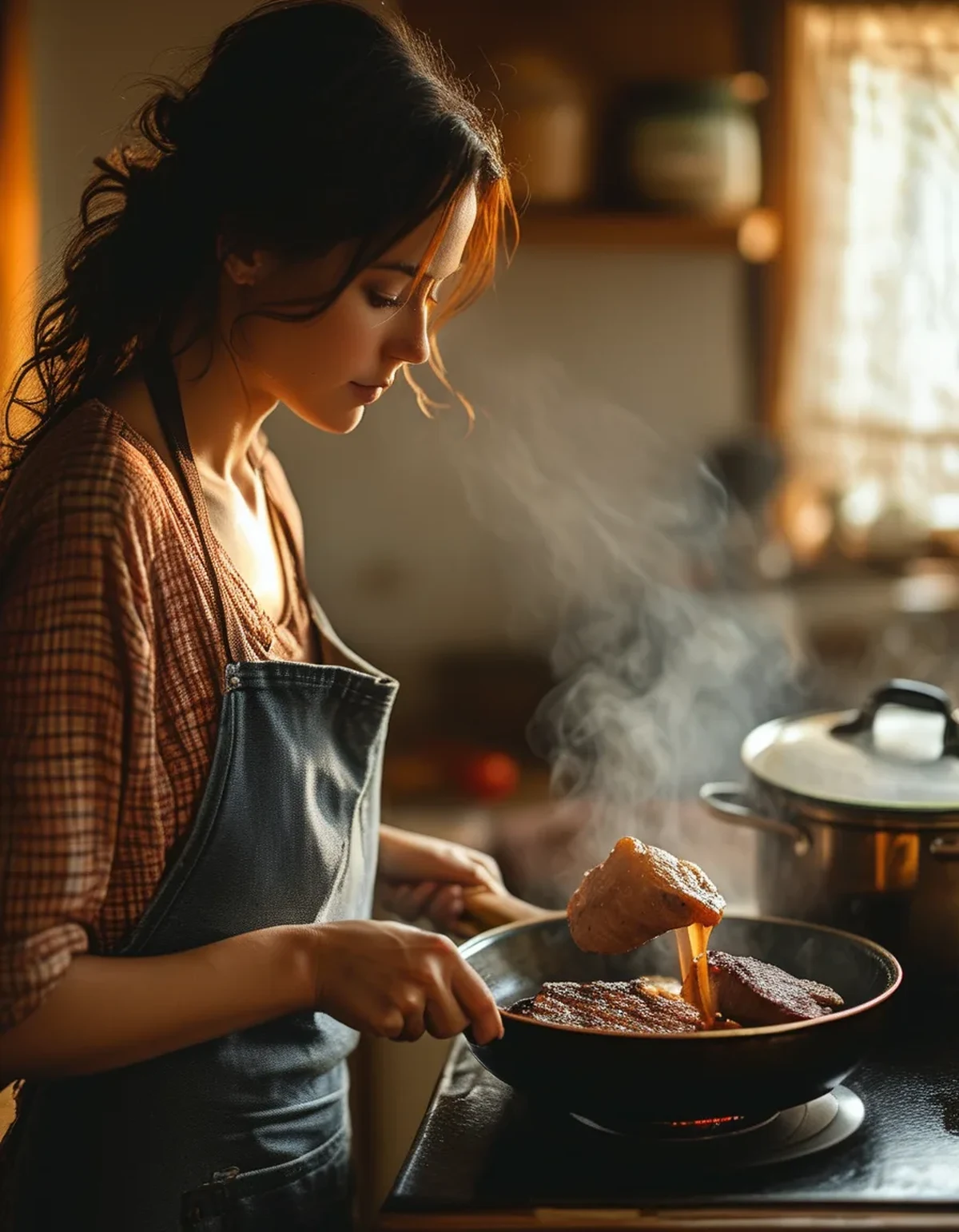
Brown the meat properly, in batches, with space. Crowding steams rather than browns and is the most common shortcut.
Soften and colour the aromatics in the same pan, then deglaze with a splash of the cooking liquid and scrape everything in.
This is the step people skip to save washing up, and it is the single largest difference between a flat slow cooker meal and a good one.
What about timing, and what goes in late?
A workable conversion: one hour in a moderate oven is roughly two hours on high or four hours on low.
Low and slow is generally better for tougher cuts, because collagen breakdown benefits from long gentle time.
Do not open the lid to check. Each opening loses significant heat and adds meaningful time, and there is nothing useful to see.
Add late: dairy and cream, fresh herbs, peas and other quick vegetables, cooked pasta, and anything you want to keep texture in. Last 15 to 30 minutes.
Add early: root vegetables, tough cuts, dried pulses that the recipe allows, and hard aromatics. Root vegetables should go at the bottom, closest to the heat.
And season at the end as well as the start, because a long cook without evaporation concentrates flavour differently than an oven does - it often needs more salt and a hit of acid at the finish.
What does not convert well?
Anything that relies on a crust, a crisp surface or a reduction. Roast dinners, anything gratinated, and glazes all lose their point.
Delicate fish, which overcooks in a fraction of the time and turns to fibre.
Recipes with a lot of wine or stock that are supposed to reduce, unless you reduce them in the pan beforehand - which is a good workaround.
Rice dishes are inconsistent because absorption varies with the cooker, though many people manage them with practice.
Pasta cooked in the pot goes to mush. Cook it separately and stir it in at the end.
And very lean cuts, which have little collagen and dry out over a long cook regardless of the liquid. Slow cookers reward the cheaper, tougher, more interesting cuts.
What Nobody Tells You About Slow Cooker Conversions
Fill level changes cooking time substantially. Slow cookers are designed to run about half to three quarters full. A quarter-full pot cooks faster and can scorch at the edges; an overfull one may never reach a safe temperature in a reasonable time.
Different cookers run at genuinely different temperatures, and modern ones tend to run hotter than older models. The first time you convert a recipe, check it an hour before you expect it - your cooker’s low may be someone else’s high.
A cold kitchen adds time. As autumn arrives, the same recipe in the same cooker can take noticeably longer, especially in a draughty kitchen or a cold utility room.
Starting from fridge-cold ingredients adds time too, and starting from frozen is not recommended on food safety grounds because the contents spend too long in the temperature range where bacteria multiply.
Thickening behaves differently. Flour-based thickening added at the start can go gluey over eight hours; a cornflour slurry stirred in for the last 20 minutes is far more reliable.
Herbs lose almost everything over a long cook. Dried herbs at the start, fresh herbs at the end - and doubling the dried herbs to compensate mostly produces a dusty flavour rather than a stronger one.
And the ceramic insert holds heat for a long time after switching off, which means the dish keeps cooking. If something is perfectly done at the end of the timer, get it out.
FAQ: Slow Cooker Conversion Questions, Answered
How much liquid should I cut?
Start with a third less than the oven recipe calls for, and half less for vegetable-heavy dishes. You can add at the end; you cannot easily take away.
Do I really have to brown the meat?
You do not have to, but it is the biggest single quality difference. A slow cooker cannot brown anything, so all of that flavour has to be made in a pan first.
How do I thicken a slow cooker sauce?
Either take the lid off and run on high for the last 30 to 45 minutes, or stir in a cornflour slurry for the final 20 minutes. Flour added at the start often goes gluey.
Is low better than high?
For tough cuts and long days, yes. High is useful when you are short of time or reducing at the end. The same dish cooked on low generally has better texture.
Can I put frozen meat in?
It is not recommended - frozen ingredients spend too long in the temperature range where bacteria multiply. Defrost fully in the fridge first. Follow standard food safety guidance.
Why is my slow cooker food bland?
Usually no browning step, too much liquid, and under-seasoning at the end. Add salt and a splash of vinegar or lemon at the finish and taste again - it often transforms the dish.
TL;DR:
- Cut the liquid by a third to a half - a slow cooker loses almost nothing to evaporation.
- Brown meat and aromatics in a pan first, because the cooker cannot brown anything.
- One oven hour is roughly two hours on high or four on low.
- Dairy, fresh herbs and delicate vegetables go in during the last 30 minutes.
- Keep the pot half to three quarters full and keep the lid on.
- Season and add acid at the end, not only at the start.
Four adjustments turn almost any braise into a slow cooker recipe. Follow standard food safety guidance.
Keep Reading
This article is for general informational purposes only and is not medical advice. Always consult a qualified health professional for guidance specific to you.