Why Adding Dairy Too Early Ruins More Slow Cooker Recipes Than People Realize
A slow cooker recipe that calls for cream or milk added at the very start, alongside everything else, is one of the more common ways a dish ends up grainy or visibly separated by the time it’s done, since dairy simply can’t handle hours of sustained low heat the way meat and vegetables can.

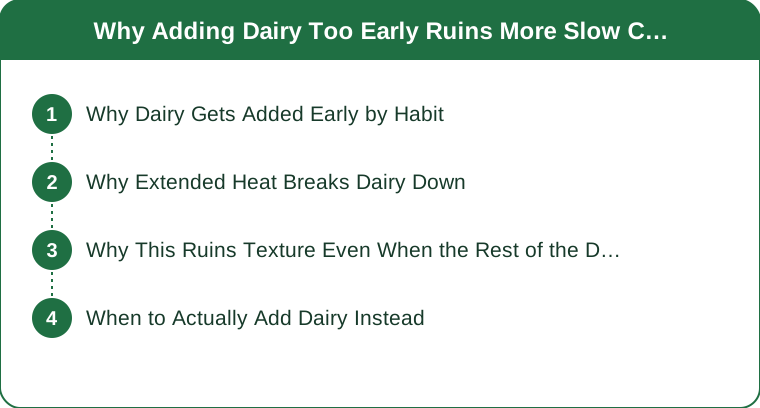
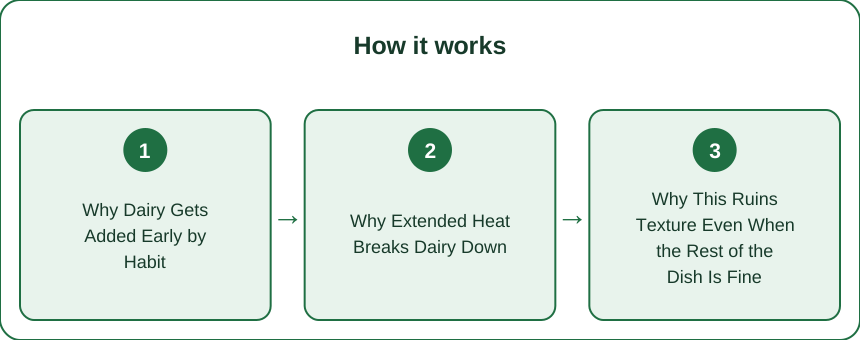
Why Dairy Gets Added Early by Habit
The habit: most slow cooker recipes following a dump-everything-in-at-once format, which works fine for meat, vegetables, and broth but treats dairy the same way despite it behaving completely differently under heat.
Why Extended Heat Breaks Dairy Down
The mechanism: the proteins in milk, cream, and many cheeses breaking apart and separating from the fat and water content when held at a steady simmer for several hours, producing a curdled, grainy texture instead of staying smooth.

Why This Ruins Texture Even When the Rest of the Dish Is Fine
The consequence: a curdled dairy component being difficult to fully mix back in even with vigorous stirring, leaving visible flecks and an uneven mouthfeel that undermines an otherwise well-cooked dish.
When to Actually Add Dairy Instead
The fix: stirring in cream, milk, sour cream, or shredded cheese only during the final thirty minutes of cooking, after the base has already finished its long simmer, and the frame (dairy breaks down under hours of sustained heat while everything else in the pot benefits from it — adding it in the last thirty minutes is what actually keeps a slow cooker dish creamy instead of curdled.)
A slow cooker recipe that calls for cream or milk added at the very start, alongside everything else, is one of the more common ways a dish ends up grainy or visibly separated by the time it’s done, since the proteins in milk, cream, and many cheeses break apart and separate from the fat and water content when held at a steady simmer for several hours. A curdled dairy component is difficult to fully mix back in even with vigorous stirring, leaving visible flecks and an uneven mouthfeel that undermines an otherwise well-cooked dish. Stirring in cream, milk, sour cream, or shredded cheese only during the final thirty minutes of cooking, after the base has already finished its long simmer, is what actually keeps a slow cooker dish creamy instead of curdled.
Keep Reading
This article is for general informational purposes only and is not medical advice. Always consult a qualified health professional for guidance specific to you.