Why Rice Turns to Mush in the Slow Cooker (And the Fix That Actually Works)
Quick Answer: Rice turns mushy because it’s added at the start and absorbs excess liquid over hours — adding it in the final 30-45 minutes instead keeps the texture intact.
You followed the recipe. Six hours later, what should’ve been fluffy rice is a starchy paste at the bottom of the pot.

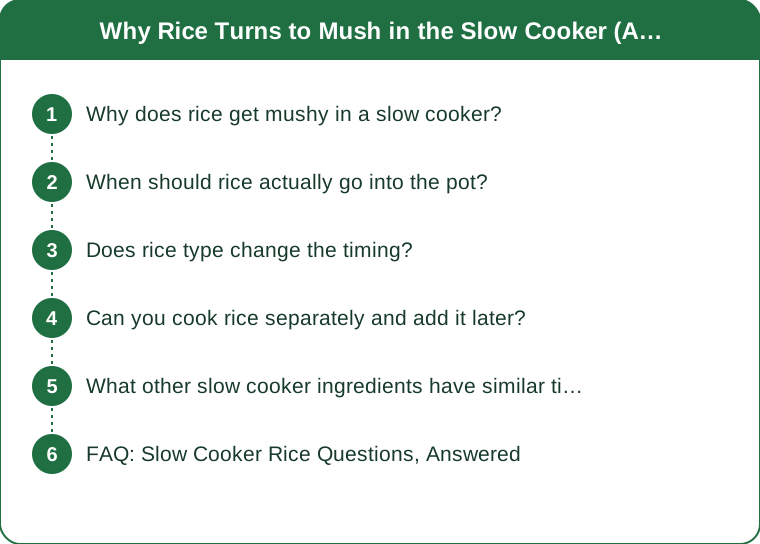
Why does rice get mushy in a slow cooker?
Rice added at the beginning of a long cook sits in liquid for hours longer than it needs to fully cook, and the starches keep breaking down well past the point of being done. Unlike stovetop cooking where you control the exact liquid ratio and timing, a slow cooker’s low, steady heat means rice added early just keeps absorbing and softening long after it’s already cooked through.
When should rice actually go into the pot?
For most slow cooker recipes on low heat, adding raw rice in the last 45 minutes to an hour of cooking gives it enough time to fully cook without turning mushy. If you’re using a rice that cooks faster, like white rice versus brown, lean toward the shorter end of that window and check for doneness before serving.
Does rice type change the timing?
Yes — white rice generally needs 30-45 minutes added near the end, while brown rice needs closer to 60-75 minutes because of its outer bran layer. Wild rice blends can take even longer, so if a recipe calls for a rice type you haven’t used before, it’s worth checking package cook times as a starting reference point.

Can you cook rice separately and add it later?
Yes, and this is actually the most foolproof method if timing a slow cooker precisely feels stressful. Cook rice separately on the stovetop or in a rice cooker, then stir it into the finished slow cooker dish right before serving — this guarantees perfect texture every time and also lets you portion control rice separately from the rest of the meal.
What other slow cooker ingredients have similar timing issues?
Pasta and delicate vegetables like zucchini or spinach share the same problem as rice — added too early, they break down or turn mushy over a long cook. As a general rule, anything that would normally cook in under 15-20 minutes on the stovetop should go into a slow cooker only in the final stretch, not at the start with meats and root vegetables.
FAQ: Slow Cooker Rice Questions, Answered
Can I use instant rice instead to avoid timing issues?
Yes, instant rice cooks even faster and can be added in the last 15-20 minutes, making it more forgiving if your schedule is unpredictable.
Why does my rice come out mushy even when I add it late?
This usually means there’s too much excess liquid in the pot — rice needs a reasonably absorbable liquid ratio, not a pool of broth, to cook properly even in a short window.
Does stirring rice into a slow cooker cause it to get gummy?
Over-stirring releases more starch and can make rice gummier, so stir just enough to distribute it evenly and then leave the lid on undisturbed.
TL;DR:
- Rice added at the start of a long cook almost always turns mushy
- Add white rice in the last 30-45 minutes, brown rice 60-75 minutes
- Cooking rice separately and stirring it in is the most reliable fix
- The same late-addition rule applies to pasta and delicate vegetables
If mushy rice has been a repeat problem, it’s not your recipe — it’s the timing, and it’s a five-second fix going forward.
Keep Reading
This article is for general informational purposes only and is not medical advice. Always consult a qualified health professional for guidance specific to you.