Why Your Slow Cooker Vegetables Turn to Mush (and the Timing Fix)
Quick Answer: Vegetables turn mushy because they’re cut too small and added at the start alongside the meat. Cut them larger, place them at the bottom (closest to the heat source), and add quick-cooking vegetables in the last 1-2 hours instead of the full cook time.
Your recipe said ‘add all ingredients’ and you trusted it. Eight hours later the meat is perfect and the carrots have dissolved into the sauce. That’s a timing problem, not a recipe failure.
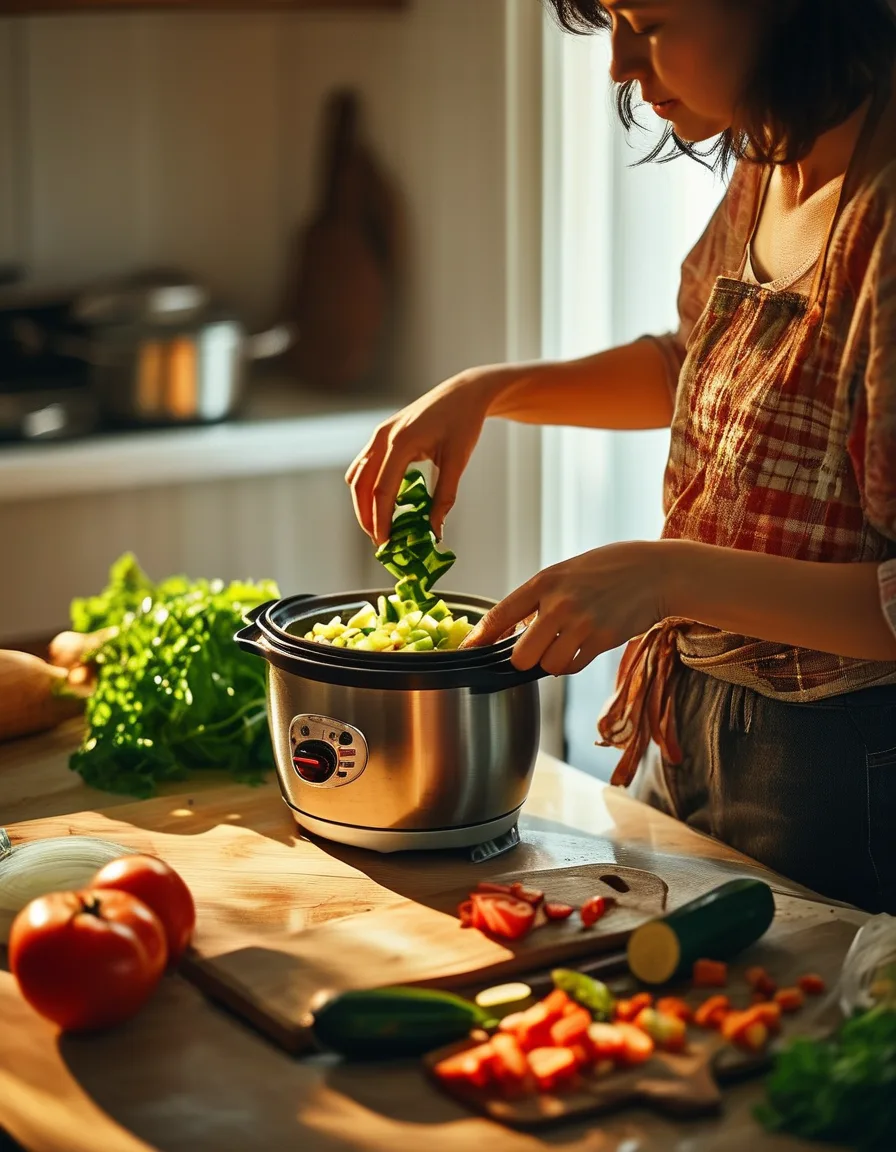
Why do vegetables cook faster than meat in a slow cooker, not slower?
Root vegetables like carrots and potatoes actually need direct contact with the heating element at the bottom to cook properly, but they also break down faster than tough cuts of meat over a full 7-8 hour cycle. Meat has connective tissue that needs the full time to break down; vegetables don’t.
Most recipes layer vegetables on top or mixed throughout, which means they’re both undercooked in some spots and overcooked into mush in others by the time the meat is finally ready.
What’s the correct layering order?
Place root vegetables at the very bottom, directly against the heating surface, then the meat on top — this ensures the vegetables get consistent direct heat while the meat’s weight doesn’t crush them into the liquid. Cut vegetables into large, 1.5-2 inch chunks rather than small dice, since smaller pieces break down far faster.
This single layout change — vegetables on bottom, larger cut, meat on top — fixes most of the mush problem without changing the total cook time.

What Nobody Tells You About Quick-Cooking Vegetables
Delicate vegetables — zucchini, peas, spinach, bell peppers — should never go in at the start of a long cook, no matter what the recipe says. Add them in the final 1-2 hours only, or they’ll disintegrate completely by serving time.
Most people don’t realize this because slow cooker recipes are often written for convenience (‘dump everything in’) rather than actual vegetable cook-time accuracy — convenience and correct timing aren’t always the same recipe.
Does the type of root vegetable change the timing?
Yes — potatoes and carrots hold up reasonably well for the full cook time if cut large and placed at the bottom, but parsnips and turnips break down faster and do better added partway through a long cook. Sweet potatoes fall apart faster than white potatoes at the same cut size, so cut them slightly larger if using both together.
FAQ: Slow Cooker Vegetable Questions, Answered
Can I add frozen vegetables to a slow cooker?
Yes, but add them later in the cook (last 1-2 hours) since they release extra water and cook faster than fresh once thawed.
Why do my potatoes go mushy but stay undercooked in the middle?
That usually means they’re cut too small and layered on top, away from direct heat — larger chunks at the bottom fix both issues.
Does a low vs high setting change vegetable timing?
Yes — on high, quick-cooking vegetables need even less time, sometimes just 45-60 minutes, so add them later than you would on low.
TL;DR:
- Vegetables turn mushy from being cut too small and added at the start with the meat
- Layer root vegetables at the bottom in large chunks; meat goes on top
- Add delicate, quick-cooking vegetables only in the last 1-2 hours
- Different root vegetables (parsnips vs potatoes) break down at different rates
Next time, flip your layering order and cut everything bigger — the mush usually disappears without changing your total cook time.
Keep Reading
This article is for general informational purposes only and is not medical advice. Always consult a qualified health professional for guidance specific to you.