Why Slow Cooker Leftovers Taste Better the Next Day — and When They Don't
Quick Answer: Overnight rest improves dishes where flavor compounds need time to distribute through fat and liquid — chili, curry, braises, bean dishes. It hurts dishes where texture is the point, because starch keeps absorbing liquid and vegetable cell walls keep breaking down in the fridge. The rule of thumb: if the dish is mostly sauce and protein, it improves. If it contains pasta, rice, potatoes, or anything you wanted to stay crisp, it degrades.
Everybody has had the chili that was fine on Sunday and excellent on Monday. Everybody has also had the soup that was excellent on Sunday and a solid block of sadness on Monday. Same fridge, same container, opposite outcomes.
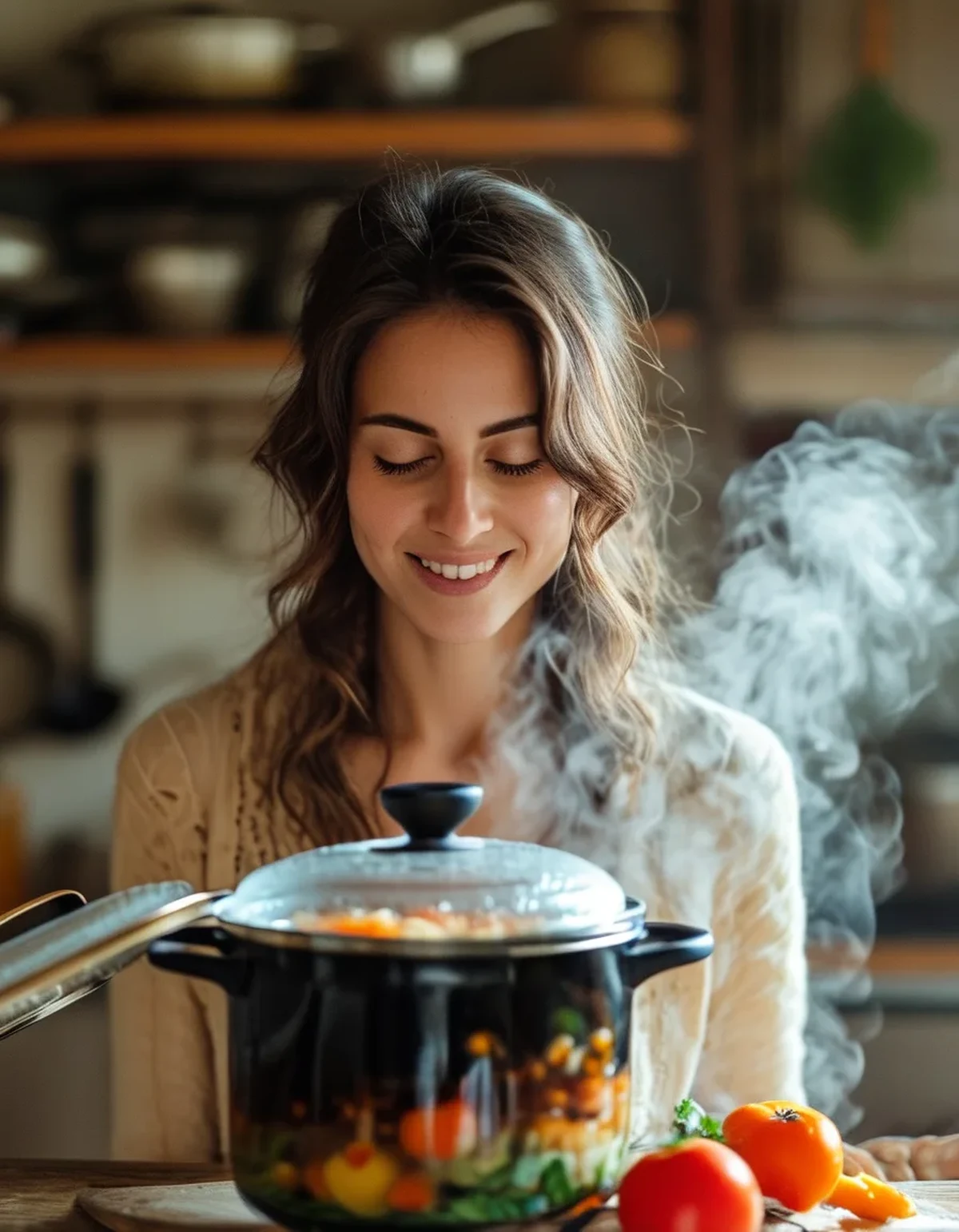
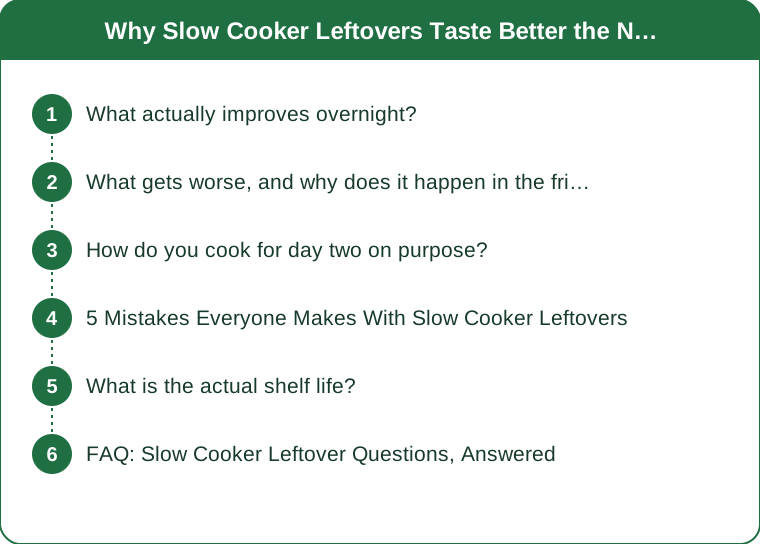
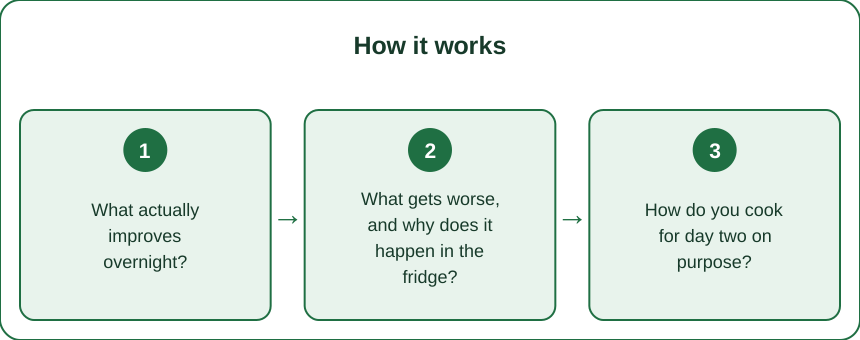
What actually improves overnight?
Three separate processes, all of which need time rather than heat.
Fat-soluble flavor redistribution. A lot of what you taste in a braise — the aromatics from garlic and onion, the compounds released from toasted spices, the fond from browned meat — dissolves in fat, not water. While the dish sits, those compounds migrate through the fat phase and spread evenly instead of staying concentrated where they started. This is the biggest single reason day-two chili tastes more like one thing and less like several things.
Continued protein and collagen breakdown. Cooling is slow, and a full pot spends a long time in the warm range on its way down. Collagen keeps converting, and connective tissue keeps softening for a while after the heat goes off. A pot roast that was nearly tender at the end of cooking is often properly tender the next day without any additional cooking.
Salt equalization. Salt moves into dense pieces of meat and vegetables slowly. A dish salted at the end tastes seasoned on the outside and bland inside. Twelve hours later it tastes seasoned throughout, using the exact same amount of salt.
The practical implication is that the dishes worth cooking a day ahead are the ones with fat, collagen, and time-dependent seasoning — chili, beef stews, curries, pulled pork, bean dishes, tomato-based sauces.
What gets worse, and why does it happen in the fridge?
Starch and cell walls do not stop working just because the heat did.
Starch keeps absorbing. Pasta, rice, barley, and potatoes continue pulling liquid out of the surrounding sauce for hours after cooking. This is why a soup with pasta in it is a soup on day one and a casserole on day two — the liquid did not evaporate, it went into the noodles. No reheating brings it back out.
Vegetable structure keeps collapsing. The pectin holding vegetable cells together has already been weakened by hours of moist heat. Cooling does not repair it, and reheating weakens it further. Zucchini, bell peppers, and green beans that were merely soft at dinner are mush the next day.
Some flavors get louder in a bad way. Garlic in particular sharpens on standing, and dishes heavy on raw-added garlic can taste harsher rather than mellower. Cruciferous vegetables — cabbage, broccoli, cauliflower — develop stronger sulfur notes over 24 hours, which is why a cabbage soup that was pleasant becomes assertive.
Dairy and cream separate. A dish finished with cream, yogurt, or milk will often break on cooling and reheating, giving you a grainy sauce that no amount of stirring fixes.
Fresh herbs die completely. Basil, cilantro, parsley, and dill lose their aromatics within hours and turn a dull olive color. What was bright is now vaguely vegetal.
How do you cook for day two on purpose?
You cook the durable part and hold the fragile part. This is the entire technique.
Cook the base, add the rest at reheat. Meat, beans, aromatics, tomatoes, stock, and hard spices all go in the slow cooker. Pasta, rice, potatoes, quick-cooking vegetables, cream, and fresh herbs get held out and added when you reheat. This one change fixes most day-two disappointment, and it costs you about four extra minutes.
Undercook vegetables you plan to keep. If carrots and celery are staying in the pot, pull the dish slightly earlier than you would for same-day eating. They will finish during cooling and reheating.
Cool it fast, not slowly. A full covered pot on the counter spends hours in the temperature range where bacteria grow best. Divide it into shallow containers, leave them uncovered until steam stops, then lid and refrigerate. Shallow and uncovered gets it through the danger zone in a fraction of the time.
Under-salt slightly on day one. Since salt equalizes overnight and liquid may reduce on reheating, a dish salted perfectly for day one is often slightly over-salted on day two. Season to just under where you want it and correct at the reheat.
Reheat gently and add liquid. Low heat on the stovetop with a splash of stock or water. Aggressive reheating dries the protein you spent eight hours making tender.
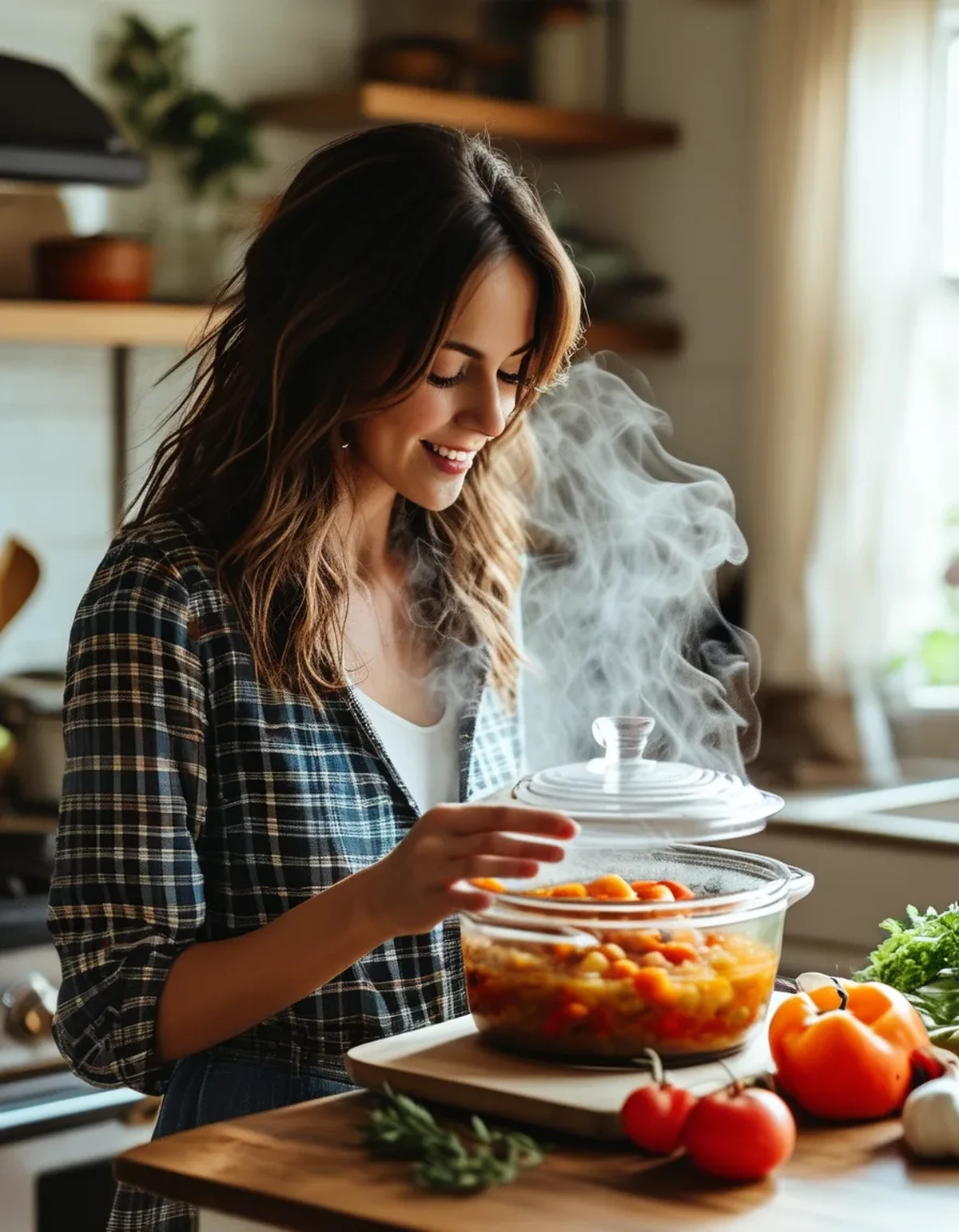
5 Mistakes Everyone Makes With Slow Cooker Leftovers
1. Putting the whole insert in the fridge. The ceramic insert is a heat battery — it holds warmth for hours and cools the contents far too slowly. It also drops the temperature of everything else in your fridge. Transfer to shallow containers.
2. Cooking the pasta in the pot. It is genuinely tempting because it is one fewer thing to wash. It is also the single most reliable way to guarantee your leftovers are worse than your dinner. Cook it separately, always, if any of the dish is being saved.
3. Adding the dairy before storing. Cream, sour cream, yogurt, and milk should go in at serving, per bowl if necessary. A curdled sauce cannot be un-curdled, and it will curdle across a cool-and-reheat cycle far more often than it survives one.
4. Freezing dishes with potatoes in them. Potatoes go grainy and slightly hollow when frozen and thawed — the cell walls rupture and release their water. Everything else in that stew freezes beautifully. Fish the potatoes out before freezing, or use them only in dishes you plan to eat within three days.
5. Reheating in the slow cooker. It takes hours to come up to temperature, which means hours in the range where bacteria are comfortable, and it overcooks everything on the way. Slow cookers are for cooking, not reheating. Use the stovetop or the microwave.
What is the actual shelf life?
Shorter than most people assume, and it depends on how fast you cooled it.
Refrigerator, properly cooled: three to four days for most cooked meat and vegetable dishes. That clock starts when the food was cooked, not when it finally got cold, which is another reason fast cooling matters.
Freezer: two to three months for good quality, longer for safety. Freeze flat in bags to speed both freezing and thawing.
Freezes well: chili, bean dishes, tomato sauces, pulled meats, most curries without dairy, and stock-based soups without pasta or potato.
Freezes badly: anything with potato, dairy-finished sauces, dishes with a lot of raw crunchy garnish, and cooked pasta.
A practical weekly rhythm: cook the base on Sunday, divide it into three days of fridge portions and freeze the rest immediately rather than at the end of the week. Food you froze on day one is much better than food you froze on day four, and the decision to freeze half is much easier to make when the pot is still full.
And one small step that changes everything about whether you actually eat it: label the container with what it is and the date. Unlabeled leftovers get eaten far less often than labeled ones, and the reason is simply that reheating something identifiable takes less decision-making energy on a Tuesday night than reheating a mystery.
FAQ: Slow Cooker Leftover Questions, Answered
Can I leave the food in the slow cooker overnight on Warm?
No. The Warm setting is designed to hold food for a couple of hours during serving, not overnight, and it sits in a temperature range that is neither hot enough to be safe indefinitely nor cold enough to stop bacterial growth. It also continues cooking the dish into mush. Refrigerate within two hours of the cook ending.
Why does my day-two chili taste saltier?
Two reasons stacking. Salt distributed evenly overnight, so you now taste it in every bite instead of some bites, and reheating evaporated some liquid, which concentrates what is there. Add a splash of water or unsalted stock when reheating and it comes right back.
Should I skim the fat before or after refrigerating?
After, always, if you want to remove it — chilled fat forms a solid cap you can lift off in one piece, which takes about ten seconds and is far more effective than skimming a hot pot. But taste before you decide. That fat is carrying a substantial share of the flavor that developed overnight, and removing all of it can leave the dish tasting thin.
TL;DR:
- Overnight rest genuinely improves fat-and-collagen dishes: chili, braises, curries, bean pots
- It degrades anything with pasta, rice, potato, quick vegetables, dairy, or fresh herbs
- Cook the durable base and add the fragile parts at reheat — that one change fixes most of it
- Cool fast in shallow containers, never store or reheat in the ceramic insert
The reason day-two chili has a reputation is that chili happens to be built entirely out of the things that improve. Give a soup with noodles in it the same twenty-four hours and it will teach you the other half of the rule.
Keep Reading
This article is for general informational purposes only and is not medical advice. Always consult a qualified health professional for guidance specific to you.