Why the Same Slow Cooker Recipe Takes Longer in a Cold Kitchen
Quick Answer: A slow cooker has no thermostat feedback for the room around it. It supplies a fixed amount of heat, and the ceramic pot loses heat to the surrounding air at a rate that depends on how cold that air is. A kitchen at 17 degrees pulls noticeably more heat from the pot than one at 26, and colder ingredients from a colder fridge and pantry start you further back. Expect to add roughly 30 to 60 minutes on low for the same result in autumn.
This is one of the few cooking variables that changes seasonally without anyone touching a dial.
This blog has covered why a half-full slow cooker cooks differently than a full one, the liquid ratio mistake, and when to add vegetables so they do not mush. Ambient temperature is the invisible fourth variable.
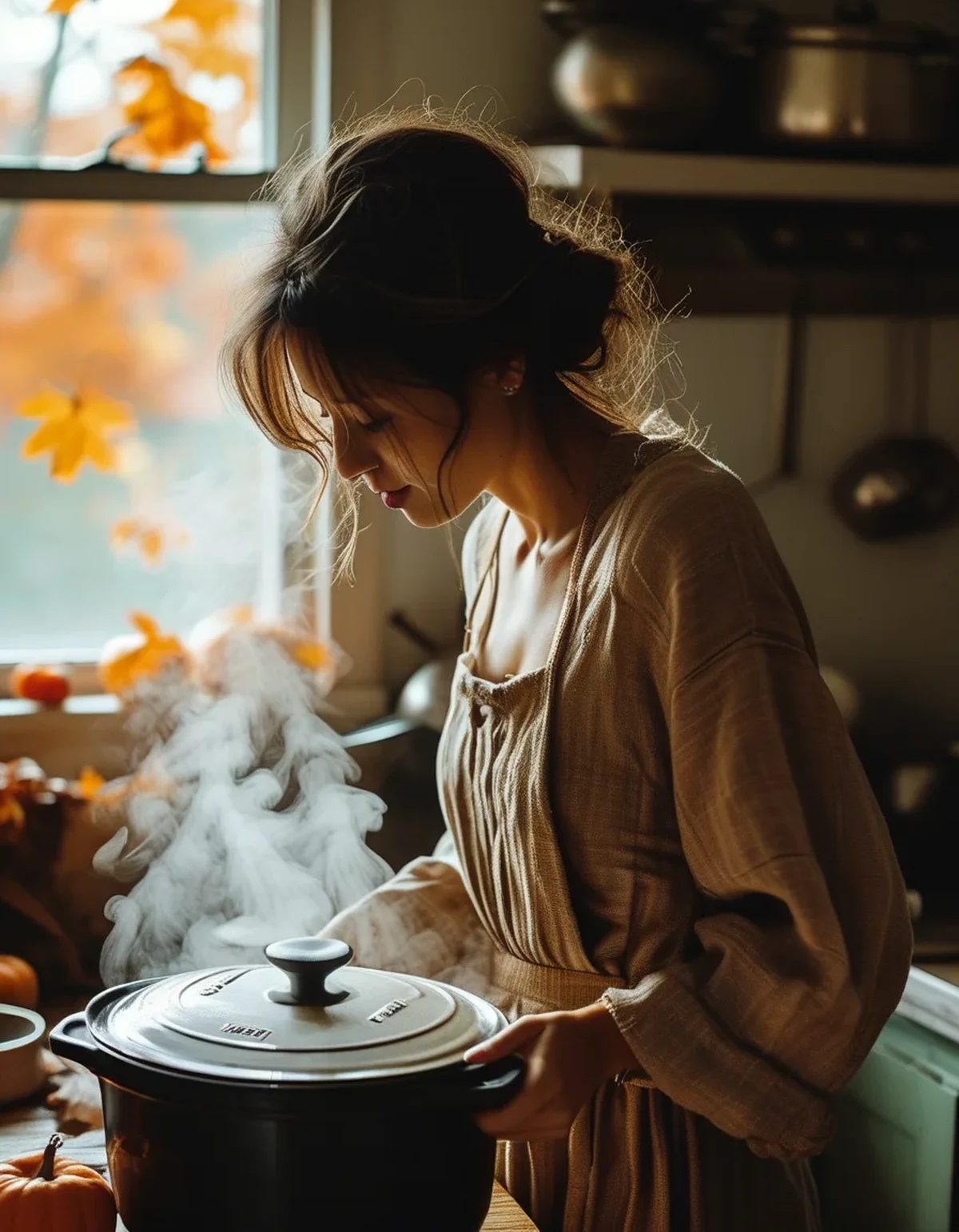
How much does room temperature really change cooking time?
Enough to matter, and more than most people would guess.
A slow cooker on low holds contents at roughly 87 to 93 degrees Celsius, but it does that by supplying constant heat against constant loss, not by measuring and correcting.
Heat loss through the pot wall is proportional to the temperature difference between the contents and the room. A 70-degree gap in a warm kitchen becomes a 76-degree gap in a cold one, which is roughly a nine percent higher loss rate.
That does not sound like much until you consider the margin. Slow cookers on low run close to the minimum useful temperature, so a small reduction in the equilibrium point produces a disproportionate change in how fast collagen converts to gelatin.
Collagen breakdown is extremely temperature-sensitive. The difference between 85 and 90 degrees is not five percent slower; it is closer to a third slower for the same degree of tenderness.
Colder starting ingredients add to it. A fridge in a cold utility room runs colder than one in a warm kitchen, and root vegetables stored in an unheated pantry can start twelve degrees below their summer temperature.
And come-up time is where most of the loss lands. Getting from cold to simmering can take two hours in a cold kitchen versus ninety minutes in a warm one, and that half hour is subtracted directly from your cooking time.
Which dishes suffer most?
The ones that were already close to the edge of their time window.
Tough cuts on low are the most affected. Shoulder, shin, brisket, and oxtail need sustained time above about 85 degrees, and a slightly cooler pot is the difference between falling apart and firm.
Dried beans from scratch are the second most affected. Beans need a genuine sustained simmer, and a cold kitchen plus a partly full pot can leave you below the threshold entirely, which is where the classic never-softening beans problem comes from.
Whole root vegetables in large chunks lag next. Density means heat has to travel, and a slightly cooler liquid extends that considerably.
Dishes with a lot of cold liquid added at the start are hit hard, because the come-up time is longer and everything shifts back.
What is barely affected: anything on high, anything already cooked, and small pieces. High runs hot enough that the extra loss is absorbed comfortably.
Also barely affected: full pots. A pot at three-quarters capacity has a favourable mass-to-surface ratio and holds temperature far better than a half-full one, which is why the seasonal effect hits small batches hardest.
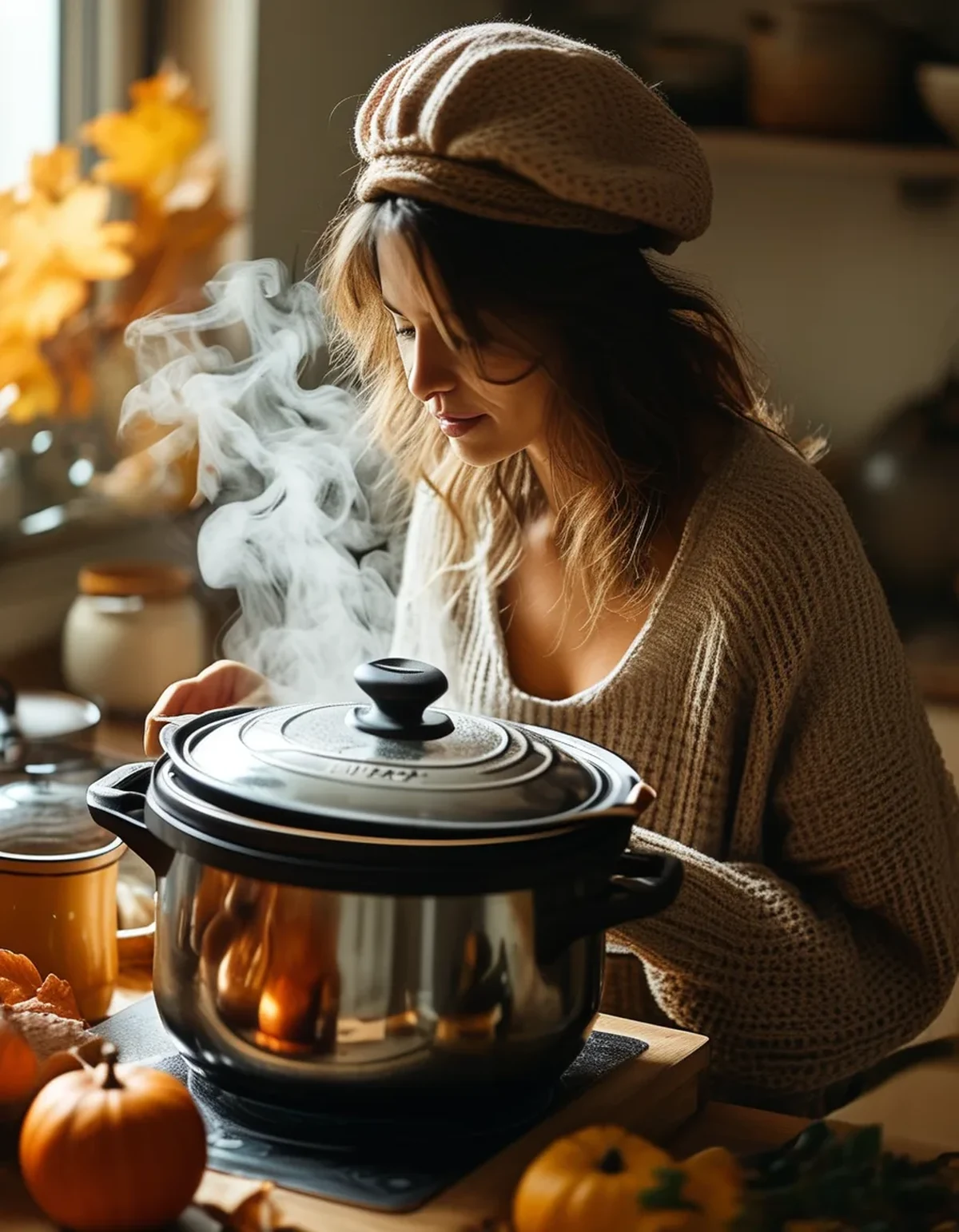
5 Mistakes People Make When the Weather Turns
Almost all of them come from trusting a time rather than a state.
Mistake one: keeping summer timings without checking. The recipe was calibrated in a warm kitchen. Give it an extra 30 to 60 minutes on low and check before serving, not at the moment you planned to eat.
Mistake two: putting the cooker next to a draughty window or an outside wall. Moving it eighteen inches into the room genuinely helps, because both cut convective loss around the pot.
Mistake three: lifting the lid to check. Each lift costs roughly 20 to 30 minutes of recovery time on low, and this costs more in a cold kitchen than a warm one. Check once, near the end.
Mistake four: adding cold stock straight from the fridge. Warming your liquid in the kettle or a pan first removes most of the come-up penalty and costs two minutes.
Mistake five: switching to high to compensate. High is not concentrated low. It is a different texture outcome, tougher on lean cuts and more likely to reduce your liquid too far. Add time instead of heat.
The bonus mistake: blaming the meat. People replace a perfectly good butcher over a problem that was an ambient temperature change and an extra half hour.
What to change, practically
Small adjustments, none of which require a new recipe.
Add 30 to 60 minutes on low as your default from the first cold week. For beans and very tough cuts, closer to 60 to 90.
Preheat the ceramic insert with hot tap water for five minutes while you prep, then tip it out. This removes a surprising amount of come-up lag.
Warm your liquid before it goes in. Hot stock rather than cold stock is the single highest-value change and it is essentially free.
Bring meat out of the fridge 30 minutes ahead where food safety allows, or cut it smaller so the interior catches up faster.
Fill the pot to at least half, ideally two-thirds. Under half, the seasonal effect roughly doubles and results get unpredictable.
Move the cooker off cold stone worktops if you have them; a wooden board underneath insulates the base meaningfully.
And judge doneness by feel, not clock. A fork should meet no resistance in tough cuts; beans should crush against the roof of your mouth. Those tests are season-proof in a way that a number of hours never is.
FAQ: Slow Cooker Timing Questions, Answered
Does room temperature really affect a slow cooker?
Yes. The appliance supplies constant heat but has no feedback loop for the room, so a colder kitchen means a higher rate of heat loss through the pot and a slightly lower holding temperature. Expect roughly 30 to 60 extra minutes on low in a cold kitchen.
Should I use high instead of low in winter?
No. High produces a different texture outcome, particularly on lean cuts, and reduces liquid more. Adding time on low is the better correction for the same dish.
Why do my beans never soften in the slow cooker?
Usually because the pot never reaches a sustained enough simmer, which is a combination of a cold kitchen, a half-full pot, and cold liquid. Preheat the insert, use hot liquid, fill it to two-thirds, and give it longer. Also make sure salt and acidic ingredients go in late.
TL;DR:
- A slow cooker has no thermostat for the room, so a cold kitchen means a lower holding temperature and a longer cook.
- Add 30 to 60 minutes on low from the first cold week; 60 to 90 for beans and very tough cuts.
- Warm your liquid and preheat the insert. Those two changes recover most of the lost come-up time.
- Half-full pots suffer roughly twice as much as two-thirds-full ones. Fill it properly or scale the recipe.
If the recipe you trusted all summer suddenly disappoints, check the room before you blame the butcher.
Keep Reading
This article is for general informational purposes only and is not medical advice. Always consult a qualified health professional for guidance specific to you.